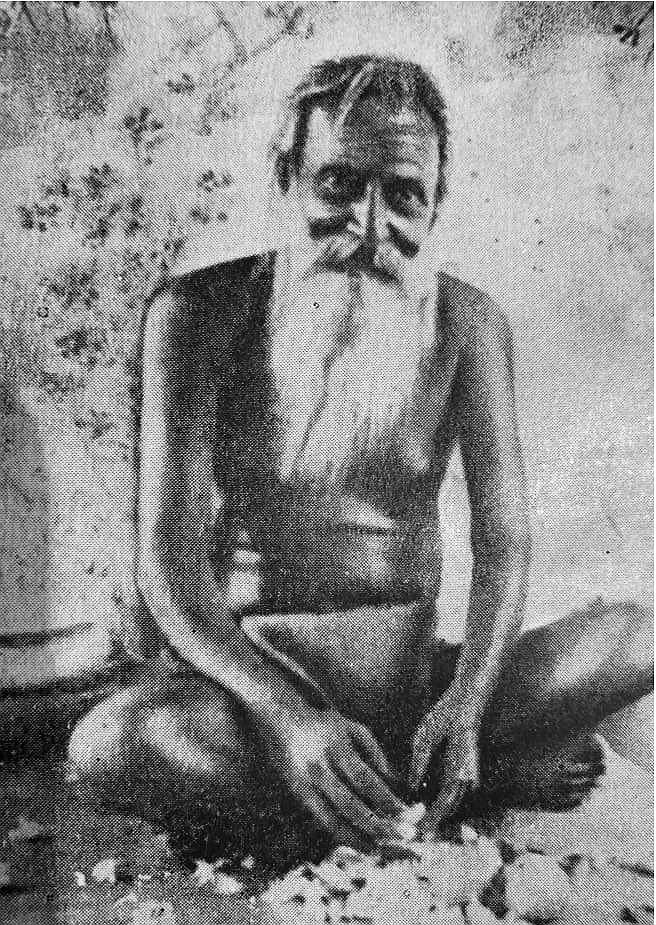
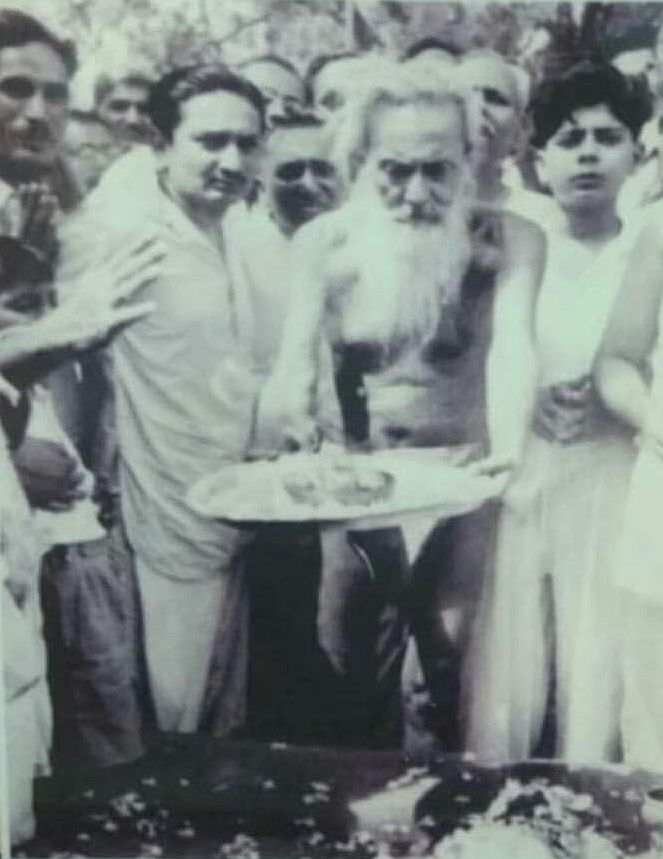
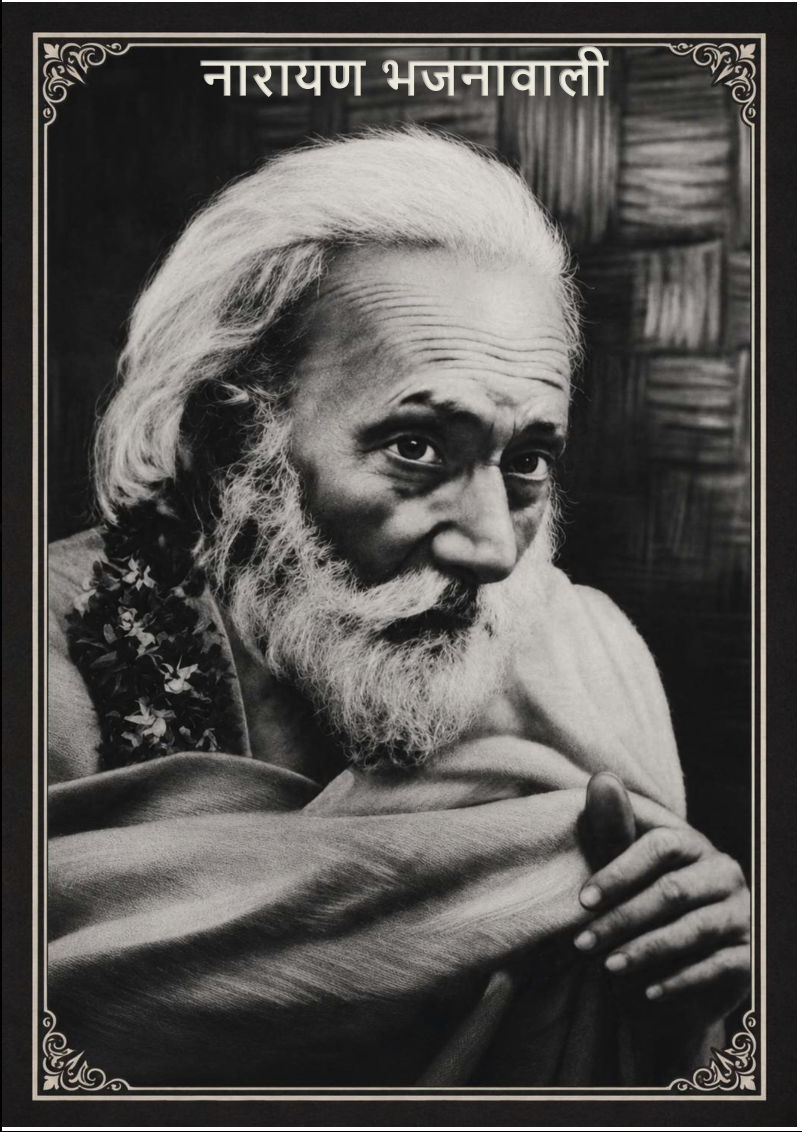
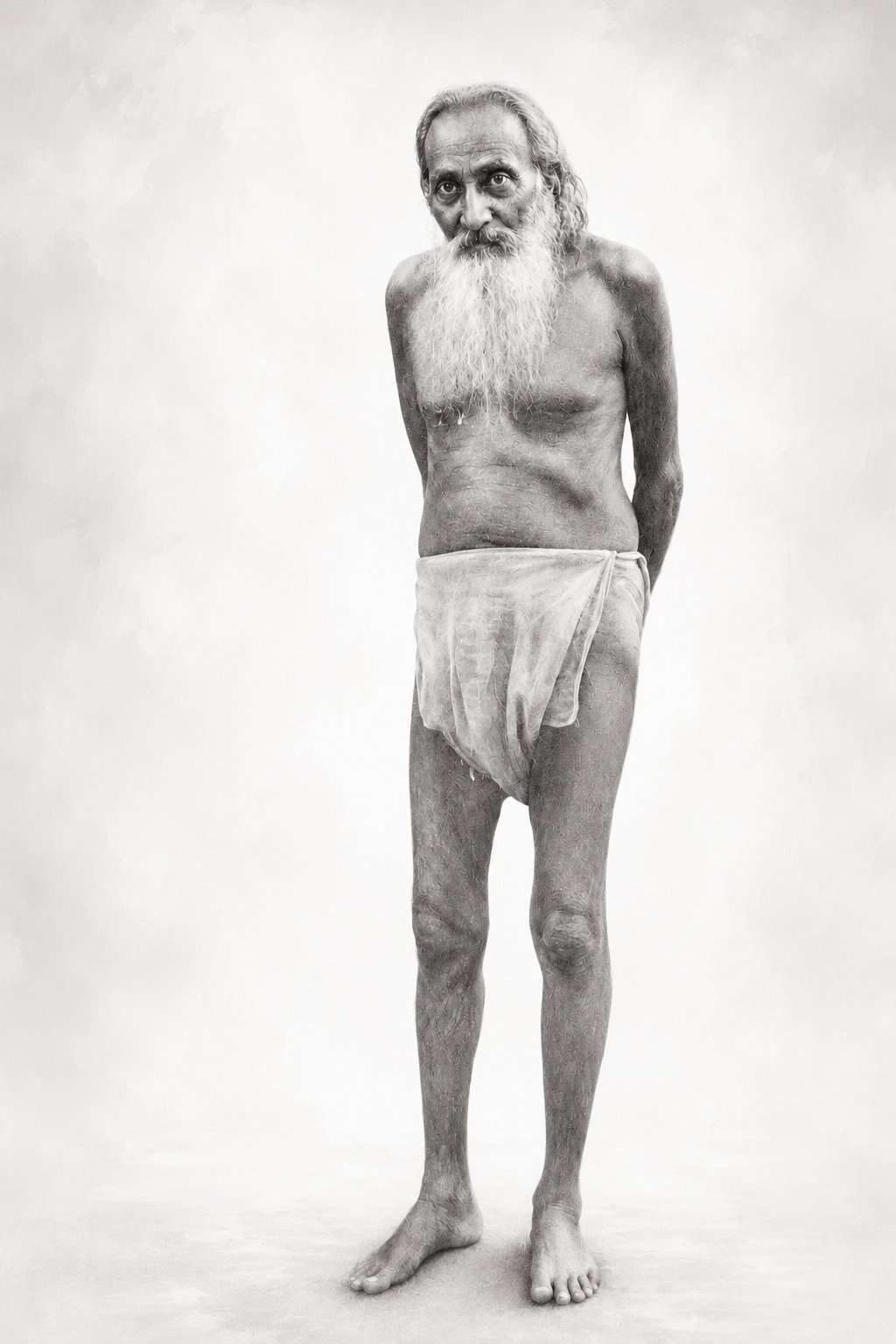
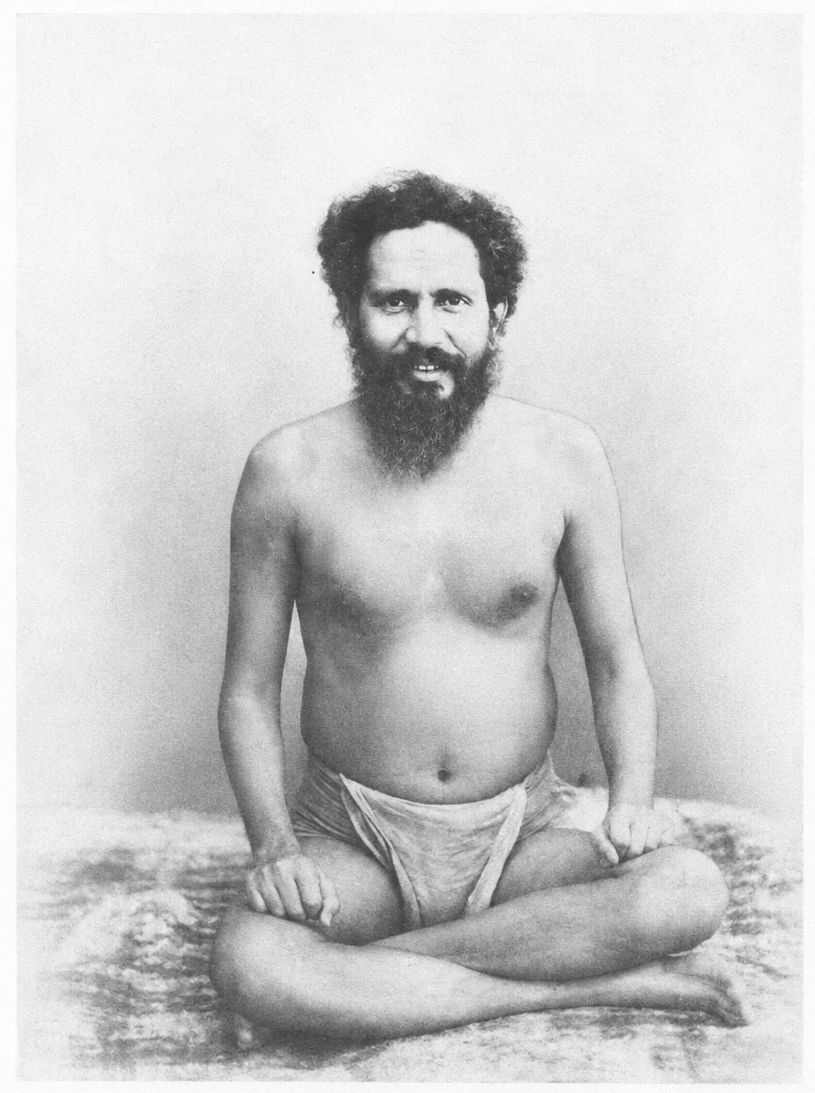
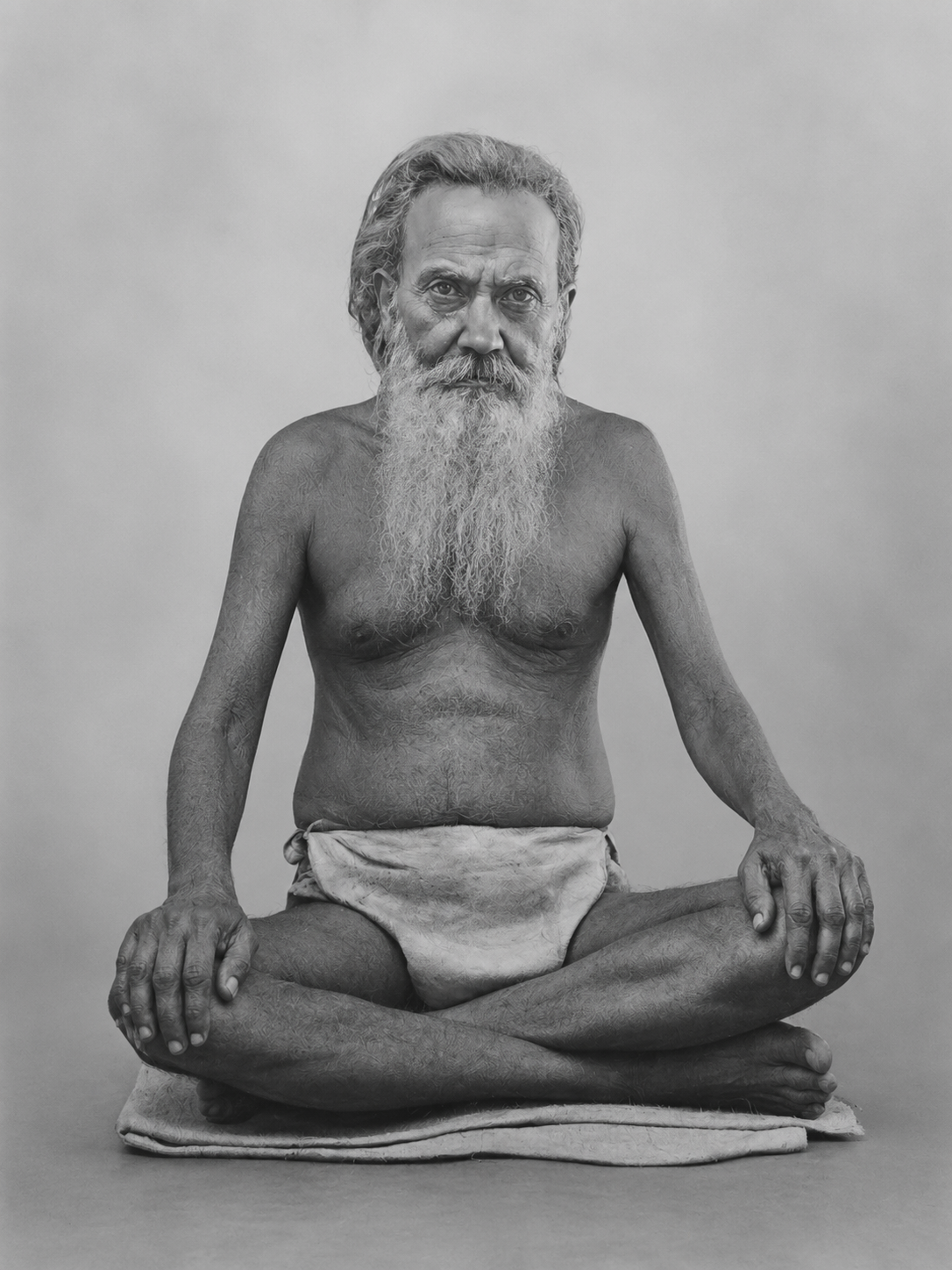
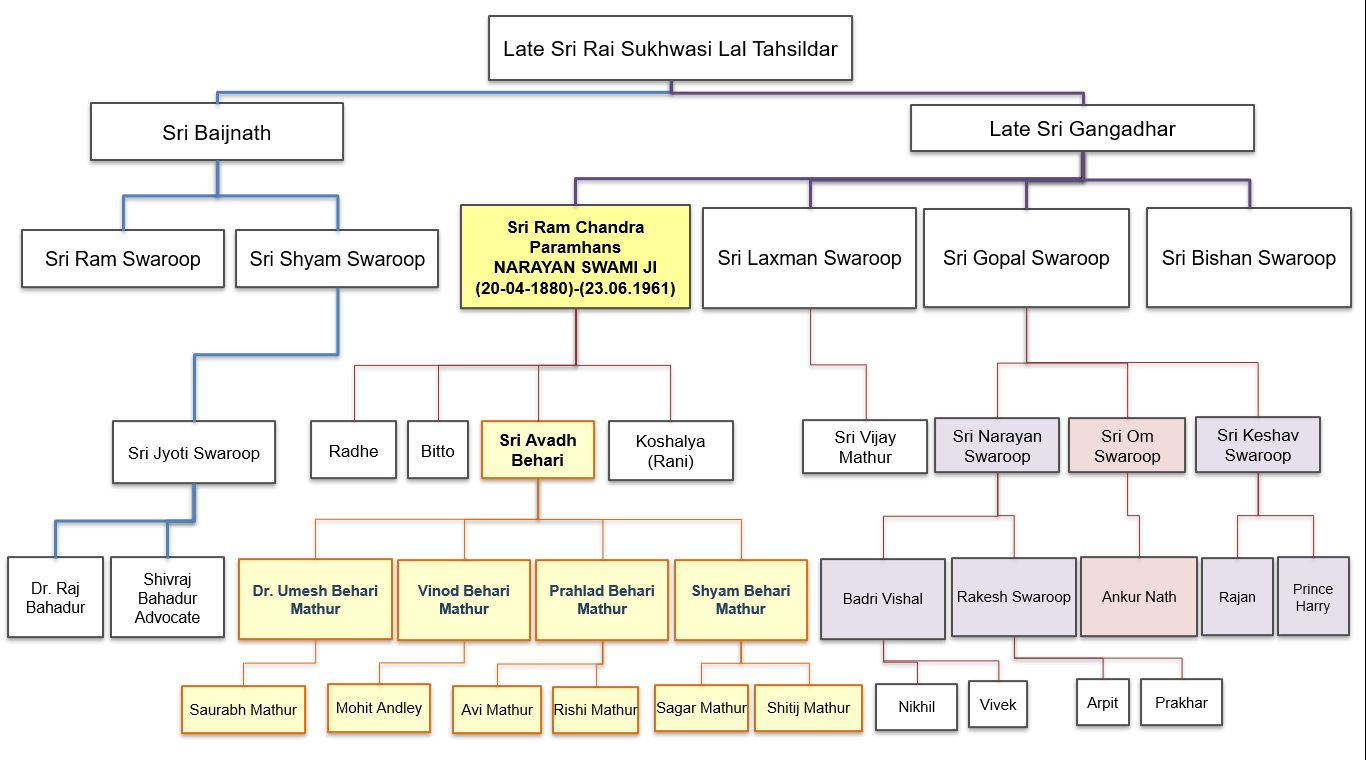
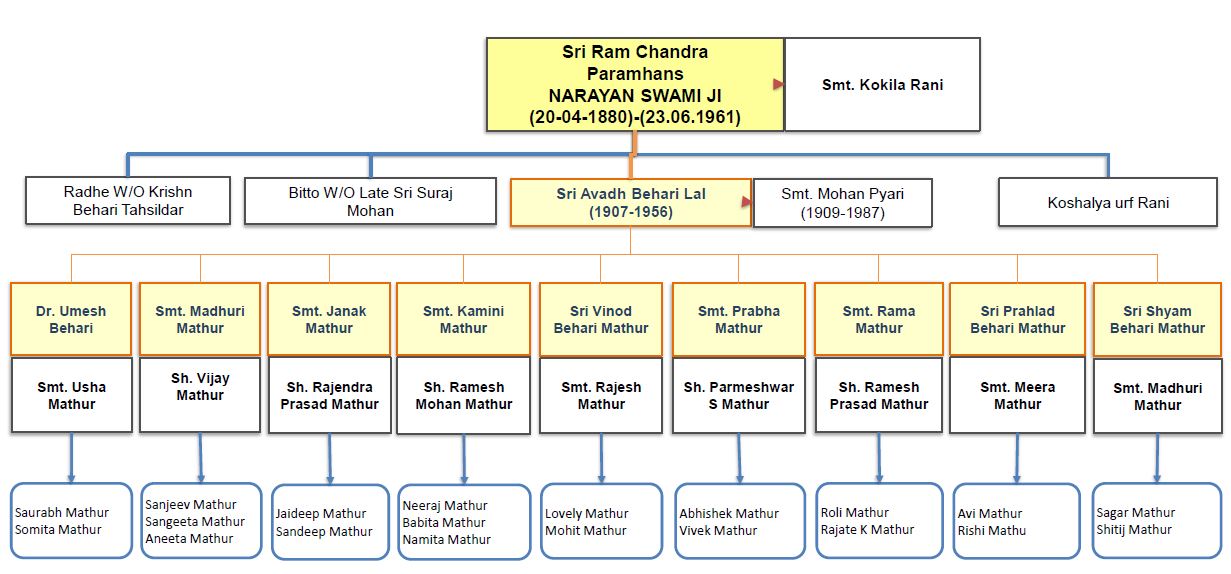
Born in 1880 in Moradabad, Sri 108 Paramhans Narayan Swami Maharaj
renounced worldly privilege in search of God, Guru, and truth.
Established in unbroken remembrance of “Narayan,” he lived a life
of bhajan, silence, austerity, compassion, and surrender, leaving
behind a timeless spiritual legacy for seekers everywhere.
Sri 108 Paramhans Narayan Swami Maharaj was born on 20 April 1880 in
Moradabad into a respected and prosperous Mathur Kayastha
family. Though born into comfort and social standing, he was
drawn early toward deep vairagya, or detachment from worldly
life. Seeking true spiritual direction, he renounced household
life, embraced simplicity, and undertook a path of intense
devotion and discipline.
In his own account, he spent a lot of time in search of a Guru
who can show him the path, without much success. Then came a
turning point when the Lord appeared to him in the form of a
sadhu and revealed, "I am your Guru—Badrinarayan." From that
moment, his life became one of complete surrender to Narayan,
centered in Naam-japa, bhajan, silence, austerity, and
Guru-bhakti.
He later lived in such constant remembrance of God that those
around him described him as immersed in the Divine Name day and
night, detached from possessions, and moved to tears by love of
Bhagavan. He left his earthly body on 23 June 1961, but his
teachings continue to guide seekers today.
A sacred library of devotion, wisdom, and spiritual guidance
Maharaj Ji's teachings live on through three sacred works — some
penned in his own hand, others recorded from his own words by those
closest to him. Each book is a lamp on the path — guiding seekers
through the wisdom of bhakti, naam jap, seva, and dharma.
Biography
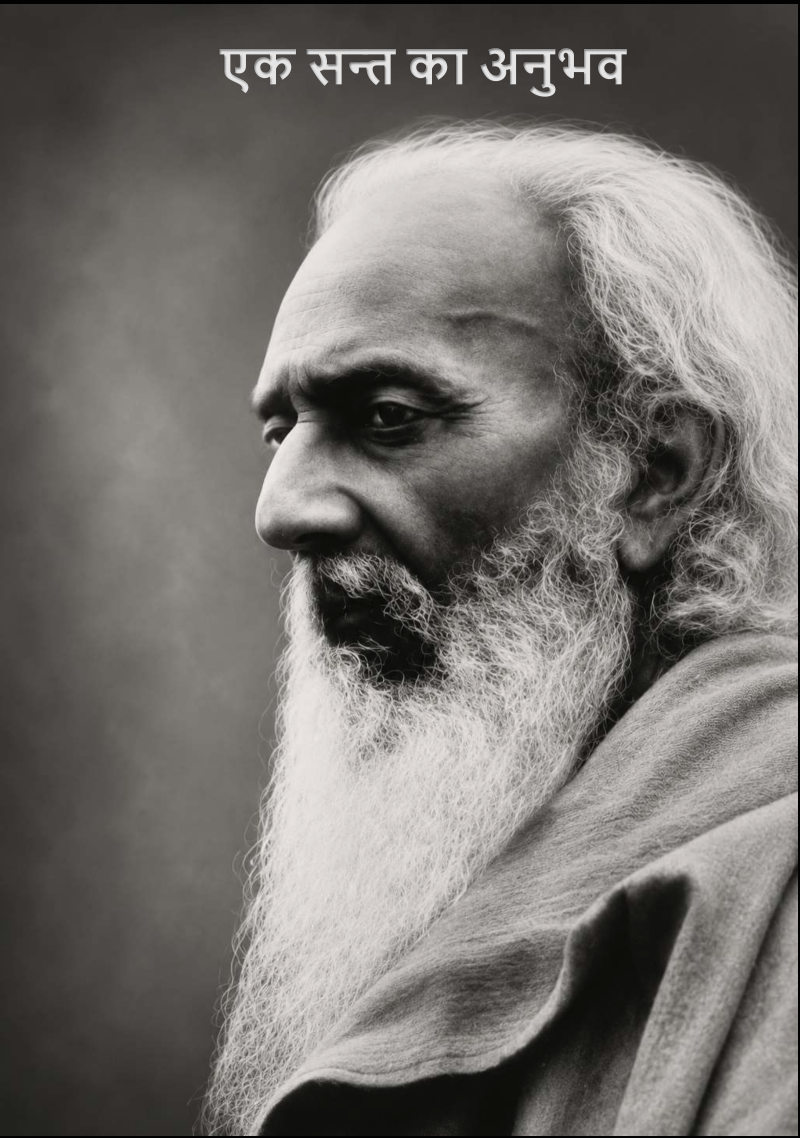
Ek Sant Ka Anubhav
Ek Sant Ka Anubhav is a treasured spiritual text that brings
together the life experience and teachings of Maharaj ji. In
this book, Maharaj ji speaks from direct experience about
renunciation, Guru-bhakti, bhajan, truth, discipline,
compassion, and constant remembrance of Narayan. It is both an
autobiographical glimpse into the making of a saint and a
practical spiritual guide for seekers walking the path of
devotion.
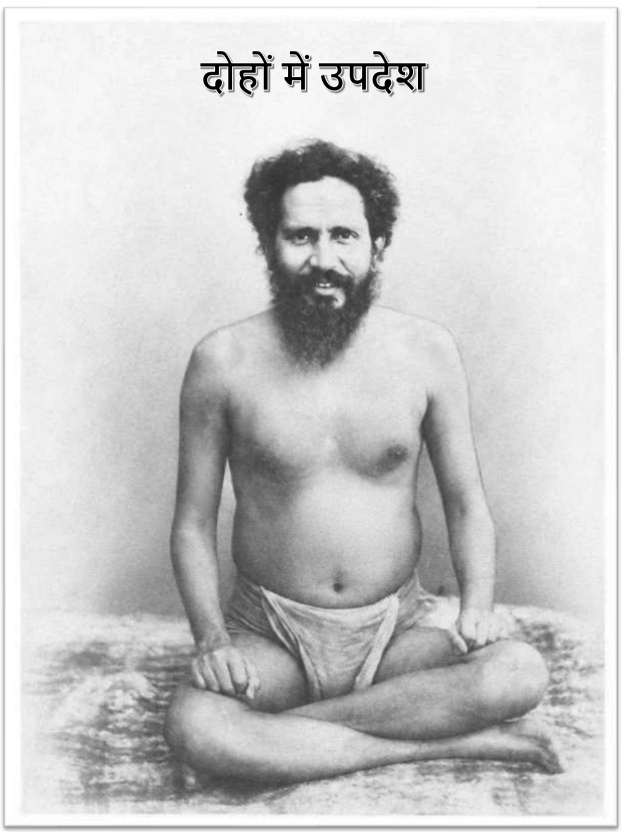
Upadesh Doho Mein is a small but powerful collection of
spiritual and ethical teachings presented in the form of
dohas. Written especially for householders, it reminds readers
to live with dharma, right conduct, devotion, and
self-awareness. Maharaj ji explains that these verses are not
meant to be read quickly, but contemplated slowly and practiced
regularly, so that the mind is purified, good deeds become
natural, and both this life and the life beyond are elevated.
Narayan Bhajnawali is a devotional offering of bhajans and
spiritual songs meant to deepen love for Narayan. Maharaj ji
explains that singing and listening to sacred verses is one of
the most powerful ways to steady the mind, awaken devotion,
reduce worldly chinta, and cultivate vairagya. Written from
lived states of love, longing, and surrender, this collection
invites readers and singers alike to experience bhakti not only
through words, but through heartfelt song.
Timeless wisdom for a life of devotion, simplicity, and grace
Maharaj Ji's teachings were rooted in lived experience. Whether
speaking of devotion, the divine name, household life, or selfless
service, his words carried the authority of a life fully given to
God.
Thought of the Day
'नारायण' कहे जो भजन करे, अमर पदवी को पाय ।
रटन करे उस नाम की, जीवन मुक्त हो जाय ।।
"Narayan" says: whoever practices devotion attains the
immortal state; by continually repeating that Divine Name,
one becomes liberated while still living.
— दोहों में उपदेश, दोहा 1
Bhakti — Devotion
The foundation of all spiritual life
True bhakti is not performance or ritual — it is the
natural movement of the heart toward God. Just as a river
flows toward the ocean, a devotee's love, when genuine,
flows effortlessly toward the divine.
Devotion is not confined to the prayer room. Maharaj Ji
urged his followers to carry bhakti into every act —
cooking, working, speaking. When awareness of God
permeates daily life, every moment becomes sacred.
The seeker's effort takes them to the door, but only
surrender opens it. Grace is received by those who empty
themselves of pride. The moment we stop claiming credit
for spiritual progress is when true progress begins.
"Bhakti asks nothing of you except your heart. Give that, and
everything else is given to you."
Naam jap requires no special qualification, no elaborate
setting. A person chanting the divine name while walking,
working, or resting is engaged in the highest form of
worship — one that purifies the mind and draws the soul
closer to its source.
Just as water shapes stone through persistence, naam jap
reshapes the mind through faithful repetition. Like dyeing
cloth — dipped again and again until the color holds
permanently — the name of God must be repeated until it
colors every thought.
"If you forget everything else, remember this: take the name.
Morning, evening, always — take the name."
The hands that serve are holier than the lips that pray.
True seva is performed without expectation. When one
serves another being, one is directly serving the divine
that resides in every heart.
A glass of water offered with love, a kind word spoken to
a stranger, a moment of patience with family — these are
the true acts of service. Grand gestures mean nothing if
the small moments are empty of compassion.
"The hands that serve are holier than the lips that pray."
— Maharaj Ji
Go Deeper
Explore the books where these teachings are elaborated, or discover
the life story behind the wisdom.
Born into dignity and comfort, Maharaj Ji's life became a journey of
vairagya, Guru-kripa, Naam-japa, bhajan, and complete surrender to
Narayan.
Biography
Life & Legacy of Sri 108 Paramhans Narayan Swami Maharaj
From privilege to surrender, from longing to divine assurance
Sri 108 Paramhans Narayan Swami Maharaj was born on 20 April 1880
(Chaitra Sudi 15) in Moradabad, into a wealthy and respected
Mathur Kayastha family. He came from a distinguished lineage whose
forefathers had served as Diwans under the emperor in one of the
provinces. His early life, by worldly standards, began in comfort,
dignity, and social standing. Yet his true life would unfold along
a very different path.
From within that background arose a deep and transforming spirit
of vairagya, an intense inner detachment from worldly existence.
As this dispassion deepened, he resolved to leave household life
behind. But before doing so, two concerns troubled him deeply. One
was practical and deeply human: how would he survive by begging
for alms, and how would he bear the shame of it? The second was
spiritual and far more important: without a true Guru, how could
renunciation have meaning?
It was during this period of inner struggle that, as he later
recounted, God sent a sadhu to him. The sadhu said he had come
from Badrinarayan. In conversation, he spoke of a rare herb that,
if taken daily in a tiny quantity, could remove hunger completely.
He also warned that its effect would be lost if the matter were
disclosed to others.
Receiving this herb, Narayan Swami Ji was greatly encouraged. Soon
after, he set out for Haridwar, gave away what belongings he still
had, and then proceeded to Rishikesh, embracing renunciation in
earnest. For seven days, he used the herb and experienced no
hunger. But this came at a cost: his body became extremely weak.
He lost strength, found even sitting and rising difficult, and
most importantly, the weakness began to interfere with his bhajan.
Recognizing that anything which disturbed remembrance of God was
not truly helpful, he gave it up.
He then accepted a deeper truth of the renunciate's life: to seek
bhiksha is the dharma of a sadhu. He would go out for alms and
then sit by the banks of the Ganga and eat simply.
Yet one longing remained unresolved within him, the longing for a
Guru. The thought became so intense that he began to feel that
without a Guru, even sannyasa itself was incomplete. In that state
of anguish and spiritual urgency, he resolved that rather than
continue without divine guidance, the body itself should be
surrendered to Mother Ganga.
Then came the decisive revelation of his life. One night, in a
dream-like spiritual vision, he felt as though he were standing
upon a mountain. At that moment, the Lord appeared before him in
the form of a sadhu and said:
"I am your Guru - Badrinarayan."
The divine figure then gave him a loincloth and a blanket, and
instructed him:
"Say 'Narayan, Narayan,' and become a Paramahansa."
After this, the vision ended, but its authority and grace remained
with him completely.
Filled with certainty and joy, he left Rishikesh and journeyed
onward through the sacred Himalayan route, passing through
Gangotri and Kedarnath, until he reached Badrinarayan, where he
received darshan. Later, he received another command in a dream:
he was to complete the pilgrimage of the Char Dham and then
proceed to the banks of the Narmada to dedicate himself there to
bhajan.
In obedience to this divine instruction, Sri Narayan Swami Maharaj
Ji completed the pilgrimage and then went to the Narmada region,
where he steadily deepened his spiritual life. There he gradually
increased the count of his Naam-japa and continued the disciplines
and practices that he later described in his teachings.
The Significance of "Paramhans," "Narayan Swami," and "108"
This divine instruction that Maharaj ji received is regarded as
the basis for his being known as Paramhans. In the Vedic
spiritual tradition, the term Paramhans denotes a highly
elevated saint who has attained self-realisation and is
svarupa-siddha, one who has realised his true spiritual nature
and identity.
There is also a remarkable account associated with Maharaj Ji's
spiritual life: the holy name "Narayan" was said to be heard
emanating from his entire being. This extraordinary
manifestation was witnessed at Geeta Vatika in the presence of
Shri Hanuman Prasad Poddar Ji, the renowned founder and editor
associated with Kalyan. For Maharaj Ji's devotees, this was a
profound indication of his complete absorption in the Divine
Name.
Why He Was Called "Narayan Swami"
Maharaj Ji is said to have perceived the presence of the Lord
in every living being. Such a vision is regarded in the
spiritual tradition as a very high state of realisation.
On the banks of the Ganga, Maharaj Ji would, at times, bow down
before people and touch their feet while continuously chanting
only the name "Narayan." His vision of Narayan in all beings,
together with his constant absorption in the holy name, led his
devotees to lovingly and reverentially address him as "Narayan
Swami."
The name therefore came to signify not merely an appellation,
but the central characteristic of his spiritual life: seeing
Narayan everywhere and remaining constantly absorbed in
remembrance of the Lord.
The Significance of "108"
The designation "108" is a traditional and highly revered
honorific associated with saints and spiritual personalities in
the Sanatan tradition. The number 108 itself holds profound
spiritual significance and is traditionally associated with the
108 beads of a japa mala, used for the chanting of the holy
name of the Lord.
Among various Hindu traditions, such honorific designations are
used to express deep reverence for saints and spiritual
personalities.
Accordingly, the use of "108" before Maharaj Ji's name is an
expression of the profound reverence in which he was held by
his devotees and followers.
The important fact, from the perspective of his followers, is
that he was reverentially addressed as "108," and that this
designation was accepted and respected by Shri Hanuman Prasad
Poddar Ji and by other learned, contemporary and respected
saints and spiritual personalities.
Maharaj Ji possessed not only spiritual depth, but also a refined
appreciation and understanding of Indian classical music. He
viewed gayan vidya as a sacred medium through which love for God
could be awakened, the mind stilled, and devotion deepened. From
his own writings, it is evident that he was well acquainted with
the structure and spirit of the classical tradition: its ragas,
raginis, swaras, and devotional singing disciplines. He writes
that his love for music and composing spiritual poetry began
during his householder years, and that he received training in
music in Gwalior. Even after taking on the life of a sadhu, he
continued composing bhajans and pads, seeing sacred song as a
natural expression of divine love, longing, and surrender to
Narayan.
In his autobiographical account, he says very little about his
earlier worldly life. In fact, he explicitly states that he had
developed such aversion toward the circumstances of his former
household existence that he did not wish to write about them in
detail. He even asked forgiveness for this reserve. Instead, he
offered something more powerful than outer biography: his life
itself became his teaching. He wrote, in essence, that this alone
was his life story, and that his spiritual conviction itself was
his message.
At the time he wrote that account, he noted that he had been in
the Paramahansa state and attire for seven years, two months, and
twenty-four days.
The editor's introductory note to the book offers a precious
glimpse of how he was known by those who met him personally. He is
described as a saint born in a prosperous family and highly
educated, yet wholly immersed in God. At that time, he was said to
be engaged in constant japa of "Shri Narayan," to maintain silence
throughout the twenty-four hours, and to sleep only about two
hours a day. He kept no possessions and lived in extreme
simplicity. Those around him witnessed that whenever Bhagavan or
divine love was spoken of, tears would flow from his eyes. At
night, he would listen to the Vinay Patrika, and the devotional
expression on his face in those moments was described as
extraordinary to behold.
Equally important is the spirit in which he presented his
teachings. He made it clear that the practices described in his
writings were not speculative ideals or borrowed philosophy. He
wrote that he included only those disciplines which he had either
already practiced or was continuing to practice himself. That is
why his words carry the force of lived experience.
Sri Narayan Swami Maharaj Ji's teachings center on truthfulness,
bhajan, ajapa-japa, austerity, compassion, charity, equal vision,
devotion to Guru, and total surrender to Narayan. His life
reflects a rare integration of devotion and discipline, of love
and renunciation, of simplicity and spiritual intensity.
His legacy is therefore not merely that of a saint who withdrew
from the world. It is the legacy of a seeker who moved from
privilege to surrender, from uncertainty to divine assurance, and
from identity in the world to complete absorption in the Name of
Narayan. His life continues to remind devotees that the path to
God is shaped by longing, purified by truth and discipline, guided
by Guru-kripa, and fulfilled in unbroken remembrance of the
Divine.
Sri 108 Paramhans Narayan Swami Maharaj left his earthly body on 23 June
1961. Though his physical presence is no longer among us, his
teachings, example, and spiritual legacy continue to inspire
devotees, family, and seekers across generations.
Timeline
A Spiritual Journey
Key milestones in Maharaj Ji's life
20 April 1880
Birth in Moradabad
Born on Chaitra Sudi 15 into a respected Mathur Kayastha family
with a distinguished lineage.
Renunciation
Haridwar and Rishikesh
Gave away his belongings, embraced the sadhu's path, and
accepted bhiksha as part of renunciate dharma.
Divine Vision
Badrinarayan as Guru
Received the decisive command, "I am your Guru - Badrinarayan,"
and was instructed to say "Narayan, Narayan."
Pilgrimage
Char Dham and Narmada
Journeyed through Gangotri, Kedarnath, and Badrinarayan, then
went to the Narmada region for deep bhajan and Naam-japa.
23 June 1961
Mahasamadhi
Left his earthly body, while his teachings, example, and
spiritual legacy continue to guide devotees and seekers.
Maharaj Ji composed numerous bhajans overflowing with devotional
love and spiritual wisdom. Read the lyrics, listen to recordings,
and carry these sacred songs with you.
8 bhajans
01
The Boundless Glory of the Divine Name
"The glory of Hari's name is beyond measure…"
Naam JapAudio
02
Let the Mind Rest in Satsang
"When the mind finds its home in satsang…"
SatsangAudio
03
I Have Come to Your Shelter, O Lord
"I have come to Your shelter, O Lord…"
Bhakti
04
O Mind, Why Do You Wander?
"O restless mind, why do you chase shadows?…"
DetachmentAudio
05
The Dawn of Grace
"When the morning light breaks through darkness…"
Bhakti
06
Serve with Love
"The hands that serve with love are blessed…"
SevaAudio
07
The Simple Path
"No grand rituals, no elaborate words — just a pure heart…"
Simplicity
08
In the Company of Saints
"Where saints gather, the Lord Himself comes to listen…"
SatsangAudio
A single bhajan sung with love reaches God faster than a
thousand prayers recited without feeling.
— Sri 108 Paramhans Narayan Swami
Explore Further
Dive into the teachings behind these bhajans or discover the books.